
Week 3: The Consequences of Colonialism and Rights
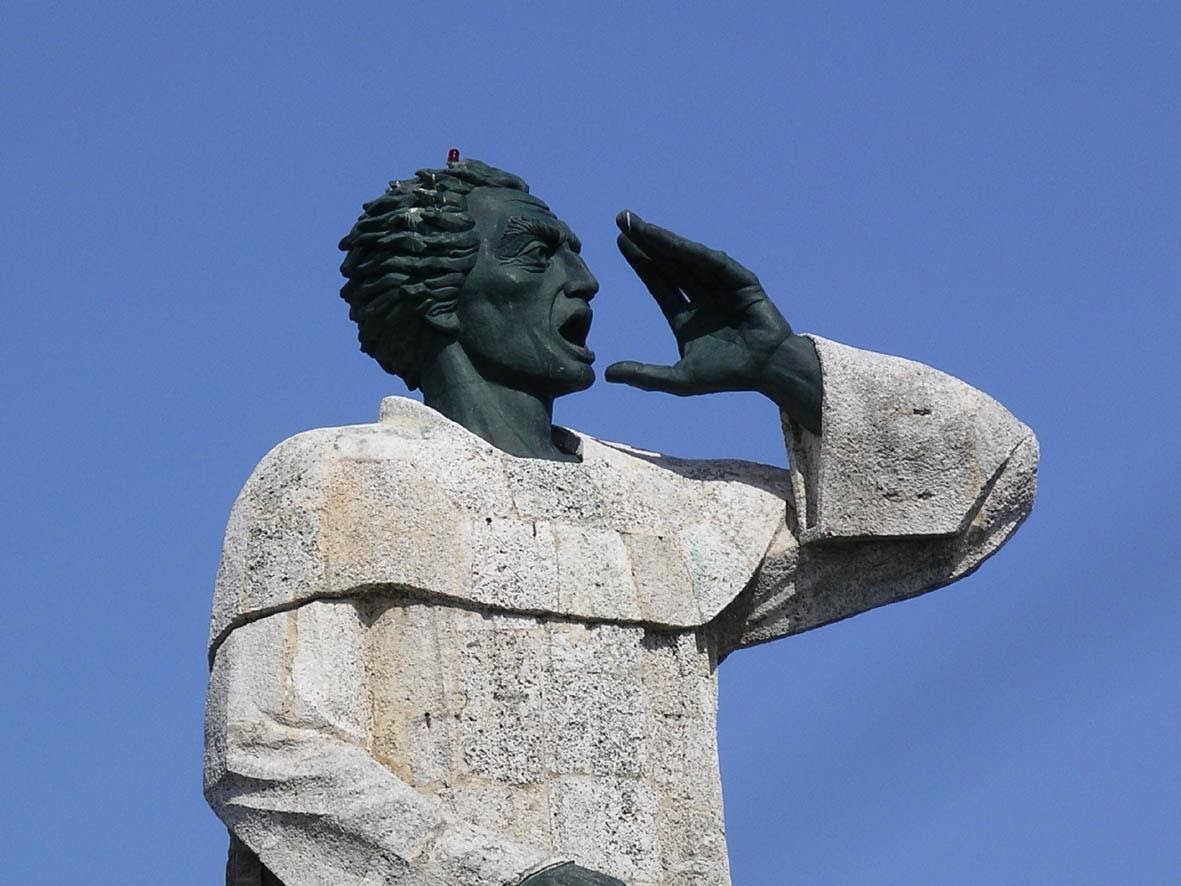
Week 3. The Consequences of Conquest and Colonialism
To what extent can we trace thinking on human rights back to Hispanic Scholasticism and the early colonial experience? How has writing about this changed over time?
How did sixteenth century Europeans make sense of the New World and the people of the America? How did the peoples of the America make sense of the early colonial experience? What was the nature of the philosophical debate regarding the relationship between the people of the Old and New Worlds? How was citizenship imagined for different groups? How was this reflected in legislation? How did people use the law to resist and/ or negotiate to protect their interests?
Core Readings:
Tamar Herzog 鈥溾�� The Americas 63(3) (2013): 303-321.
OR
Felipe G贸mez Isa. 鈥�鈥� First Fundamental Rights Documents in Europe: Commemorating 800 Years of Magna Carta, edited by Markku Suksi et al., Intersentia, 2015, pp. 93–106.
AND
(Introduction)
OR
Nicole von Germeten. "". In Jorge Ca帽izares-Esguerra, Matt D. Childs, and James Sidbury, eds. The Black Urban Atlantic in the Age of the Slave Trade. Philadelphia: University of Pennsylvania Press, 2013.
Background Reading:
Oxford Handbook (Chapters 1-4, take your pick).
Chasteen (Relevant chapters)
Williamson (Relevant chapters)
Further Reading:
Sherwin K. Bryant, Rachel Sarah O'Toole, and Ben Vinson, eds. Baltimore: University of Illinois Press, 2012. (Especially Part II and Chapter by O'Toole)
Louise M. Burkhart. The Slippery Earth: Nahua-Christian Moral Dialogue in Sixteenth-Century Mexico. Tucson: University of Arizona Press. 1989.
Daniel Castro. , Duke University Press, 2007.
Karoline P. Cook. (Philadelphia: University of Pennsylvania Press, 2016).
Jack Donnelly, 鈥楬uman Rights as Natural Rights鈥�, Human Rights Quarterly 4:3 (Autumn 1982), 391-405.
Nancy Farriss. Maya Society Under Colonial Rule: the collective enterprise of Survival, Princeton N.J: Princeton, 1984.
Richard Gray 鈥樷��, Past and Present, 1987: 115, 52-68.
Lewis Hanke. The Spanish struggle for justice in the conquest of America, 1949.
Nicole von Gemeten. Black blood brothers : confraternities and social mobility for Afro-Mexicans. University Press of Florida, 2006.
Nicole von Germeten. "". In Jorge Ca帽izares-Esguerra, Matt D. Childs, and James Sidbury, eds. The Black Urban Atlantic in the Age of the Slave Trade. Philadelphia: University of Pennsylvania Press, 2013.
Elizabeth W.Kiddy. Blacks of the Rosary: Memory and History in Minas Gerais, Brazil, University Park, USA: Penn State University Press, 2021
Brooke Larson. Cochabamba, 1550-1900: Colonialism and Agrarian Transformation In Bolivia. Durham: Duke University Press, 1998.
Sonya Lipsett-Rivera, To Defend our Water with the Blood of our Veins: The Struggle for Resources in Colonial Puebla. Albuquerque: University of New Mexico Press, 1999.
Hebe Mattos, 鈥樷��, European Review of Latin American and Caribbean Studies April 2006, 50-80.
Edmundo O'Gorman. The Invention of America. 1961.
Anthony Pagden. Spanish Imperialism and the Political Imagination: Studies in European and Spanish-American Social and Political Theory 1513-1830. New Haven/ London: Yale, 1990.
Gabriela Ramos, ' The Americas, Volume 73, Issue 01, January 2016, pp 39-57. Special Issue, Canon Law and Its Practice in Colonial Latin America.
Patricia Seed 'Are These Not Also Men?': The Indians' Humanity and Capacity for Spanish Civilisation鈥�, Journal of Latin American Studies 25:3 (1993), 629-652.
Patricia Seed. American Pentimiento: The invention of the Indian and the Pursuit of Riches. Minneapolis/ London: University of Minnesota Press, 2001.
Tatiana Seijas. (Cambridge Latin American Studies). Cambridge: Cambridge University Press, 2014.
Karen Spalding, Huarochiri: a Colonial Province Under Inca and Spanish Rule. Stanford: Stanford Univ. Press, 1984.
Sweet, James H. Chapel Hill: University of North Carolina Press, 2003. (Especially Part 2; African Religious Responses).
William B. Taylor and Franklin Pease G.Y Violence and Resistance in the Americas: Native Americans and the Legacy of Conquest, co-edited Smithsonian Institution Press, 1994.
Brian Tierney, The Idea of Natural Rights, Emory, 1997.
Brian Tierney "Religious Rights an Historical Perspective." in John Witte, Jr., and Johan D. van der Vyver (eds.) Religious human rights in global perspective: religious perspectives. The Hague/ Boston: M. Nijhoff Publishers.1996. (See chapter scan)
Timothy Bowers Vasko. " History of the Human Sciences, vol. 32, no. 3, July 2019, p. 24.
Molly A. Warsh, 鈥淎 Political Ecology in the Early Spanish Caribbean鈥� The William and Mary Quarterly, 71:4, 2014, 517-548.
(A useful review article).
Some Documentaries/ Seminars/ Podcasts:
In Our Time: , Radio 4, 20 February 2020
Miguel A. Valerio (Washington University in St Louis) presents "," based on his forthcoming book with Cambridge University Press, with comments from Kaja Cook (Royal Holloway). IHR, 2021.
Primary Sources:
Ronald D. Hussey. "The Hispanic American Historical Review, vol. 12, no. 3, 1932, pp. 301–326.
"Laws of Burgos (1512-1513)" "New Laws of the Indies" and "Juan Gines de Sepulveda's Treatise on the Just Causes of War." in Bartolome de las Casas, An account, much abbreviated, of the destruction of the Indies, with related texts / edited, with an introduction, by Franklin W. Knight, translated by Andrew Hurley.
Translations of these are also available online:
Translated by Peter Bakewell, and
Guaman, Poma de Ayala, Felipe. First New Chronicle and Good Government: On the History of the World and the Incas up To 1615, edited by Roland Hamilton, University of Texas Press, 2009.
. World Digital Library, Library of Congress