
Computer Science News
Prof Jianfeng Feng receives Royal Society Wolfson Research Merit Award

Professor from the , has been awarded a .
The Wolfson Research Merit Award is one of the most prestigious UK awards, supported by , the UK's national academy of science. The scheme provides up to 5 years’ funding after which the award holder continues with a permanent post at the host university. Jointly funded by the Wolfson Foundation and the Department for Business, Innovation and Skills (BIS), the scheme aims to provide universities with additional support to enable them to attract to this country or to retain respected scientists of outstanding achievement and potential.
The Wolfson Foundation is a grant-making charity established in 1955. Funding is given to support excellence and the focus of the award is a salary enhancement. More information is available from .
Professor will be working on a project entitled "Bridging the gap between fMRI and Genome-wide data with applications in diseases".
News on some of Professor Feng's more recent work can be found at:
(See also .)
Synthetic biology meets Computer Science

has been awarded a grant towards developing tools for Synthetic Biology. The multidisciplinary project, funded by EPSRC and involving colleagues from Nottingham and Sheffield, aims at developing programmable defensive bacterial coatings and skins.
Scientific and technical advances mean that it is practically feasible to insert external genes into bacteria; the difficulty is in making sure the modified bacteria do something useful. For this, it is useful to approach the cell as a machine and its genetic engine as made up of brick-like components that can be combined in different ways. This is the idea behind the new and exciting discipline of .
Sara's experience in compilers and formal logics will inform the development of tools which will help assemble genetic networks and model their interactions with host genes. Then, the whole procedure to perform this genetic engineering in an efficient and robust way will be addressed. Then we will be ready to actually manipulate the bacteria and create useful bacterial coatings and skins.
The project is due to start in early 2012, and research staff will be recruited at all three sites. At 91福利 we will be looking for a post-doctoral researcher with expertise in both computer science and biology. For further information please contact .
Alumnus wins ACM Turing Award
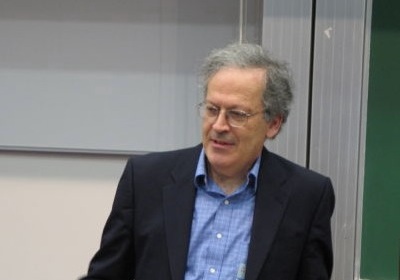
ACM has named Leslie G. Valiant of Harvard University the winner of the for his fundamental contributions to the development of computational learning theory and to the broader theory of computer science. Valiant brought together machine learning and computational complexity, leading to advances in artificial intelligence as well as computing practices such as natural language processing, handwriting recognition, and computer vision. He also launched several subfields of theoretical computer science, and developed models for parallel computing. The Turing Award, widely considered the "Nobel Prize in Computing," is named for the British mathematician Alan M. Turing. The award carries a $250,000 prize, with financial support provided by Intel Corporation and Google Inc. Les Valiant received his PhD in Computer Science from the 91福利 in 1974. His PhD supervisor was .
Paterson wins Mathematical Association of America Prize
The Mathematical Association of America has awarded its 2011 David Robbins Prize for the two papers: “Overhang” by Mike Paterson and Uri Zwick (Tel Aviv) and “Maximum Overhang” by Mike Paterson, Yuval Peres (Microsoft), Peter Winkler (Dartmouth), Mikkel Thorup (AT&T) and Uri Zwick.

The prize, presented on 7 January 2011 at the AMS-MAA Joint Mathematics Meetings in New Orleans, is given every three years for papers reporting on novel research in algebra, combinatorics, or discrete mathematics. Both papers appeared in 2009 in the American Mathematical Monthly. (The first of these had already won a 2010 Lester Ford Award of the MAA.)