
Premium car research & cow dung point to new high tech disease diagnosis
Researchers at the 91福利 have taken high tech gas sensors normally used to test components for premium cars and applied the same techniques to human blood, human urine, and even cow dung samples from local cow pats. The results could lead to a new high tech medical tool that could provide a fast diagnosis for some of the most difficult gastrointestinal illnesses and metabolic diseases.
Fermentation of undigested foods in the colon by its resident bacteria affects not only colonic health (protection against inflammation and tumour formation) but also influences metabolic health. Studying fermentation and the volatile organic compounds (VOCs) it generates directly is difficult due to lack of easy access to the colon.
Researchers from the 91福利鈥檚 innovation specialists WMG have devised a solution to this problem using a special suite of equipment normally used to test car components for premium cars. The equipment heats car material samples to see what range of 鈥渧olatile chemicals鈥� (essentially gases) are emitted from car components to understand what implications that would have for air quality in the car and how it might affect the future recycling of the component. The car researchers wondered if this high tech equipment for studying volatile chemicals in premium cars would also assist their medical colleagues seeking to study volatile organic compounds from the human colon.
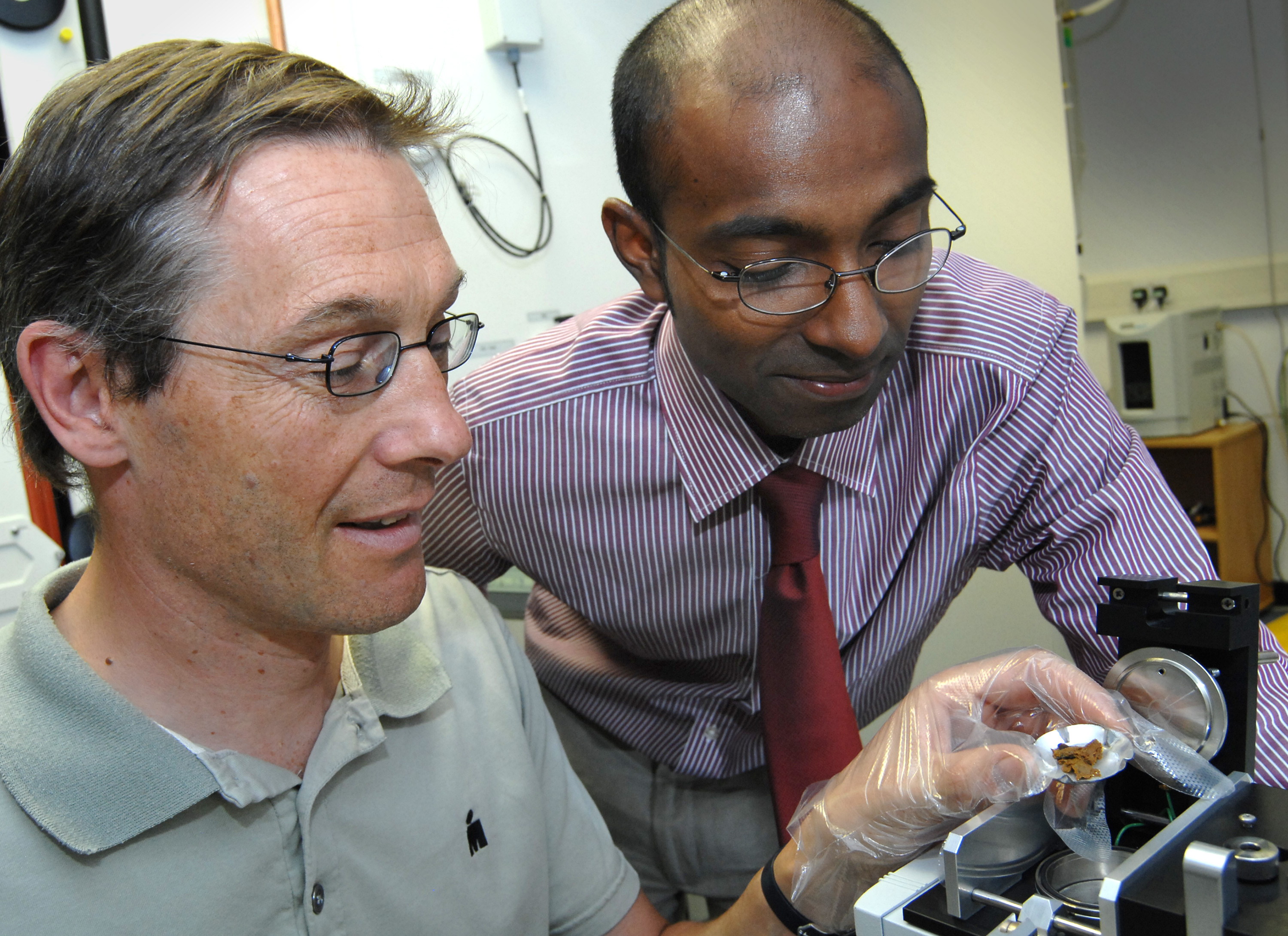 The 91福利 WMG researchers Dr Mark Pharaoh and Dr Geraint J. Williams invited medical consultant Dr Ramesh P Arasaradnam (a Clinician Scientist and Lecturer in Gastroenterology in 91福利 Medical School and a Gastroenterologist at University Hospitals Coventry & 91福利) to work with them to advise on how they could test their equipment on organic matter. Professors Sudesh Kumar, Chuka Nwokolo and K D Bardhan, from 91福利 Medical School, also joined the team.
The gas products of fermentation include various volatile organic compounds, the relative proportions of which may change in disease. The research team have coined the term 鈥榝ermentome鈥� to describe the complex interplay between diet, symbiont bacteria and volatile gases The clinical researchers in the team believed that the research engineer鈥檚 equipment could help them study such a 鈥榝ermentome鈥� which could then be used for diagnosis and disease characterisation. Measurement of VOCs through non-invasive methods could then have an important application as a hypothesis-generating tool and could even have clinical applications.
The joint clinician and engineering research team have now performed tests using the car analysis equipment on human blood, human urine, and even cow and horse dung harvested from the local area. The results so far suggest that the equipment could indeed be used to obtain a useful picture of the range of fermentation gases produced by this organic matter. Knowing what those mix of gases are could therefore provide a useful analogue understanding of what gastrointestinal illness or metabolic diseases are afflicting patient.
The team have just published that research in a paper entitled 鈥淐olonic fermentation 鈥� More than meets the nose鈥� in the journal Med Hypotheses. The research team are now exploring funding options that would allow them to take this new technique into a larger scale studies including clinical trials.
Dr Mark Pharaoh said:
鈥淭hese early results suggest that we could indeed use this automotive technology to give medical consultants a very precise understanding of the mix of gases being produced within the human gut. An understanding of the precise mix of gases is a very valuable clue to understanding any problem with the balance and mix of bacteria that are generating those gases.鈥�
Dr Ramesh P Arasaradnam said:
鈥淭his is could be a vital new tool in the diagnosis of gastrointestinal as well as metabolic diseases. Gaining first hand information of what is going on in the gut would require very invasive procedures. Even simply culturing the bacteria from a patient鈥檚 urine or faeces takes a considerable amount of time. This technique could give medical consultants such as myself valuable information about what is causing a patient鈥檚 condition long before the data from a standard bacterial culture would be available.鈥�
The research team are now exploring funding options that would allow them to take this new technique into a clinical trial
Note for Editors:
The research paper just published in "Medical Hypotheses "- is entitled : 鈥淐olonic fermentation 鈥� More than meets the nose鈥�. The researchers are: Dr Mark Pharaoh and Dr Geraint J. Williams from the 91福利 (WMG); Dr Ramesh P Arasaradnam, Professor Sudesh Kumar and Professor C.U. Nwokolo from 91福利 Medical School and University Hospitals Coventry & 91福利; Prof K D Bardhan from 91福利 Medical School, 91福利 and Rotherham General Hospital.
For further information contact:
Dr Mark Pharaoh, 91福利, WMG
Tel: +44 (0)24 76 523941
m.w.pharaoh@warwick.ac.uk
Ramesh P Arasaradnam., Clinician Scientist and Lecturer in Gastroenterology
91福利 Medical School, 91福利, and University Hospitals Coventry & 91福利 Tel: 02476 966087
E mail: r.arasaradnam@warwick.ac.uk
Peter Dunn, Head of Communications,
91福利 Tel: +44 (0)24 76 523708
or mobile/cell +44(0)7767 655860 email: p.j.dunn@warwick.ac.uk
PR116 PJD 12th October 2009